
"10kg annual production"
100 article(s) found

Characteristics of Katim Coffee Bean Flavor and Taste Variety production area treatment method Manor Baking degree Grinding degree introduction
The annual average temperature is 19-21 ℃ years, the accumulated temperature of 10 ℃ is more than 6800 ℃, the coldest monthly average temperature is 11.5 ℃, the absolute lowest temperature is above 1 ℃, the coldest monthly average temperature is 11.5 ℃, the monthly mean temperature of 13 ℃ is more than two months, the extremely lowest general year is more than 0 ℃, and some years appear-1 ℃ or short-2 ℃. Below 1200m above sea level, annual rainfall 1100mm; soil
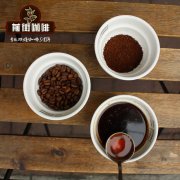
How about Peruvian Rose Summer Coffee? does the award-winning Santa Claus Manor taste good?
Rose Summer Variety of Santa Claus: 100% Arabica (Geisha) Rose Summer Origin: tea Mayou, Peruvian production season: 6-9 treatment: red honey SCA score: 90.62altitude: 1600m: 10.3% density: 835g (165g) annual output weight: 6000kg/ annual output weight: 25kg product characteristics Santa Claus Santa Claus is named because the owner of the local

Indonesia's coffee production fell 30% this year, coffee demand increased by 10% annually
Professional coffee knowledge exchange More coffee bean information Please pay attention to coffee workshop (Weixin Official Accounts cafe_style) By the third quarter of this year, Indonesia's national coffee production has decreased by an average of 25% to 30%. The sharp drop in coffee production was due to unstable weather and infestation of coffee production centres, with coffee plantations in the eastern part of the country being the most affected. Indonesian coffee exports

China's coffee consumption market will usher in a new era of "street coffee"
Professional baristas please follow the coffee workshop (Wechat official account cafe_style) data source: according to Chinanews.com, as an international trade commodity, coffee was produced in the world by about 8.5 million tons in 2015, with major coffee-producing countries such as Brazil accounting for 70 per cent of global coffee production. The scale of the global coffee consumption market is about 12 trillion yuan, with annual consumption.

Flavor description of Katim Coffee beans introduction of regional varieties produced by grinding scale treatment
The field management measures are suitable for the management of general small-grain coffee. Propagation method: adopt seed propagation, select 5-year-old fine mother tree, harvest fully mature, fruit shape is normal, full, size is basically the same, with two-seed fruit as seed, using sand bed to promote germination, plastic bag seedling. The annual average temperature of the selected forest land is 1921 ℃, and the accumulated temperature of 10 ℃ is more than 6800 ℃.

Which countries drink the most coffee per capita?
Walking around the streets of the United States, you will immediately feel that the United States is a country immersed in coffee: a Starbucks can be found on almost every street corner; McDonald's is turning into McCoffee; Duncan doughnuts are also becoming the most frequented place for breakfast. As you all know, these world's largest coffee chains all originated in the United States, so the United States has become the largest in the world.

Philippine coffee prices may rise
According to a report in the Philippine Standard on July 2, the head of the Philippine Coffee Commission recently said that due to the expected decline in production and increased import demand, the price of coffee in the Philippines may rise, and the price of locally produced instant coffee is expected to increase by 5%. Non-instant coffee increased by 15%. The annual output of Philippine coffee reached 30, 000 tons at its peak, but the annual demand was 100000 tons, which is a traditional coffee.
Philippine Coffee prices rise
Recently, the head of the Philippine Coffee Commission said that due to the expected decline in production and increased import demand, the price of coffee in the Philippines is likely to rise. The price of locally produced instant coffee is expected to increase by 5% and that of non-instant coffee by 15%. The annual output of coffee in the Philippines reached 30, 000 tons at its peak, but the annual demand is 100000 tons. It is a traditional coffee importer and is expected to produce 26000 coffee this year.

China's coffee consumption is increasing year by year-the growth rate has been stable at more than 16% in the past decade.
In terms of absolute quantity, coffee consumption in China is still in the doldrums. At present, the scale of the global coffee consumption market is about 12 trillion RMB. The United States is the largest coffee consumption market in the world, with an annual consumption of about 3 trillion RMB, while the coffee consumption market in China is about 70 billion RMB. However, in terms of growth rate, the annual growth rate of coffee consumption in China is about 15%, which is much higher than that of the whole country.

Katim Coffee Bean Flavor description introduction to the manor of the region where the varieties are produced
Katim Coffee Bean Flavor description Variety production area treatment Manor introduces the field management measures suitable for the management of general small-grain coffee. Propagation method: adopt seed propagation, select 5-year-old fine mother tree, harvest fully mature, fruit shape is normal, full, size is basically the same, with two-seed fruit as seed, using sand bed to promote germination, plastic bag seedling. Selection of suitable forest land
Coffee bean Katim CIFC7963
Characteristic small seed coffee, belongs to the Katim high generation variety, the plant is medium dwarf, the growth vigor is vigorous, the secondary character is stable, the crown top bud tender leaf is emerald green, the whole plant leaf color is dark green, the plant shape is columnar, the Internode is short, the branch is many, the growth is exuberant, the adaptability is wide, the drought resistance is strong, has the certain cold resistance ability, under the medium management level, the average dry bean yield is more than 200 kg. Seeds per kilogram
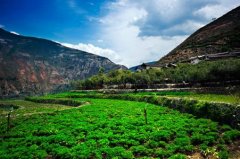
Cultivation techniques of Baoshan small-grain Coffee
I. the environmental conditions required by small-grain coffee originated in Ethiopia in north-central Africa, located in 69 N, 3440 E, 13001900m above sea level, with 16001900mm precipitation and an average annual temperature of 20 ℃. In the process of long-term evolution, coffee has specific requirements for environmental conditions due to the joint action of biology and climate.
History and Present Situation of Coffee Cultivation in China
Coffee production in China has experienced a tortuous course of development. From the 1950s to the early 1960s, coffee production had a peak period of development. In 1960, the national planting area reached 130,000 mu, with an annual output of more than 300 tons.

How about Starbucks Ethiopian food? Starbucks launches Ethiopian moderately roasted coffee
Yega Xuefei is a small town in Ethiopia, 1700-2100 meters above sea level. It is located in the northwest of Sidamo Province. It is one of the highest coffee producing areas in Ethiopia and is synonymous with Ethiopian boutique coffee. Strictly speaking, Yega Xuefei is a by-product area of Ethiopia's Sidamo producing area (Sidamo), which is independent because of its special flavor.
Starbucks Ethiopia Yega Sheffield Red Cherry Project Coffee beans Solar Essex Altland Manor
Yega Xuefei is a small town in Ethiopia, 1700-2100 meters above sea level. It is located in the northwest of Sidamo Province. It is one of the highest coffee producing areas in Ethiopia and is synonymous with Ethiopian boutique coffee. Strictly speaking, Yega Xuefei is a by-product area of Ethiopia's Sidamo producing area (Sidamo), which is independent because of its special flavor.

How to grow small grains of coffee in Baoshan, Yunnan? can we grow good coffee beans in China?
Professional coffee knowledge exchange more coffee bean information please pay attention to the coffee workshop (Wechat official account cafe_style) 1, the environmental conditions required by small Coffee Coffee is native to Ethiopia in north-central Africa, located in 69 N, 3440 E, 13001900m above sea level, precipitation 16001900mm, annual average temperature 20 ℃ lower layer of tropical rain forest. In the long-term process of evolution
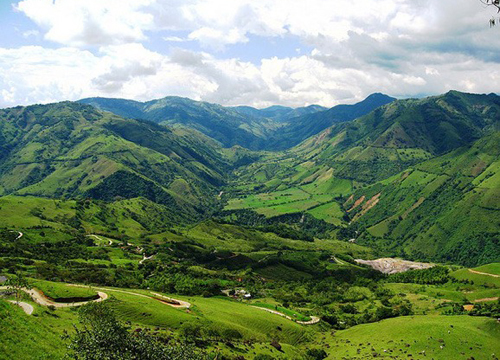
Brazilian Coffee Industry Brazilian Coffee production areas learn about Brazilian Coffee Industry
Coffee industry in Brazil Coffee is a traditional industry in Brazil. Since 1960, coffee cultivation in Brazil has been ranked first in the world, with an average annual output of 24.6 million bags (60 kg each). In 2002, due to favorable weather and a good year for coffee production, Brazilian coffee reached the best level in history, reaching 47.2 million bags, an increase of 59.6 per cent over 28.137 million bags in 2001. According to the United States Department of Agriculture 20
Analysis on the Development Environment and advantages of Coffee Industry in Yunnan Province
Analysis on the development of coffee consumption at home and abroad from an international point of view, the world is in a trend of steady growth.
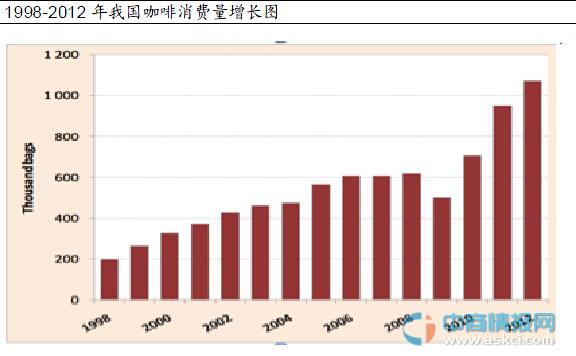
Analysis of China Coffee Consumption Market in 2015
1. Changes in coffee drinking volume and drinking structure in China: compound 13% growth, instant-ready to drink-fresh grinding From 1998 to 2012, coffee consumption in China increased from 199,000 bags to 1.1 million bags, with an annual growth rate of about 12.8%. China has a population of about 1.3 billion, and coffee consumption has risen from 9.6 grams to 47.6 grams, with an average annual growth rate of about 12.1%. If the growth rate of 12.8% is maintained, the deadline
History and present situation of Coffee production
History of World Coffee production Coffee originated in the tropics of northern and central Africa. It has been cultivated for more than 2000 years, and the Arabs began to plant it in 525 BC. At first, coffee beans were only used for chewing. In 890 AD, Arab merchants brought coffee to Yemen and made it into a drink for the first time. By the 13th century, Arabs had become in the habit of stir-frying coffee, but to